

As parents, we all want to give our children the best. We want them to grow up joyful, curious, and capable. But in our desire to make them happy, we sometimes forget the power of simplicity. In this final part of our Montessori series on language and intelligence, we explore a topic that often gets overlooked: how imaginative play and thoughtful toy choices support your child’s language, emotional growth, and cognitive development.
Inspired by Chapter 8 of Montessori from the Start, this post is a gentle reminder that less is often more, and that a child’s ability to build intelligence begins with real experiences, meaningful materials, and time for uninterrupted play.
Why Toy Selection Matters
Toys are not just for entertainment, they are tools for growth. According to Montessori, the toys we offer our children can either support or hinder their development.
Here is the goal:
We want to raise a child to whom the world makes sense, who can think about that world wisely and who loves and respects themselves and others.
By choosing toys with care, we send a message: you are important, your play matters, and the world is worth exploring with wonder.

The Magic of Reality for Young Minds
In the first six years of life, children are not yet ready for abstract or fantasy-based thinking. They are living with an absorbent mind — one that takes in the real world through touch, sound, movement, and experience. It is only after six that children begin to develop reason and imagination in the abstract sense.
That means we do not need to push make-believe worlds on toddlers. Instead, we should offer real-life experiences and realistic toys that help children make sense of the actual world they live in.
This does not mean removing imagination. Instead it means building it from a strong foundation of reality.
The Purpose of Toys Under Age 3
For children under 3, toys should:
- Help distinguish real from unreal
- Offer order and categorization
- Encourage sequential thinking (beginning, middle, end)
- Support language learning through naming and repetition
- Be sensory-rich and naturally beautiful
Examples of Meaningful Toys:
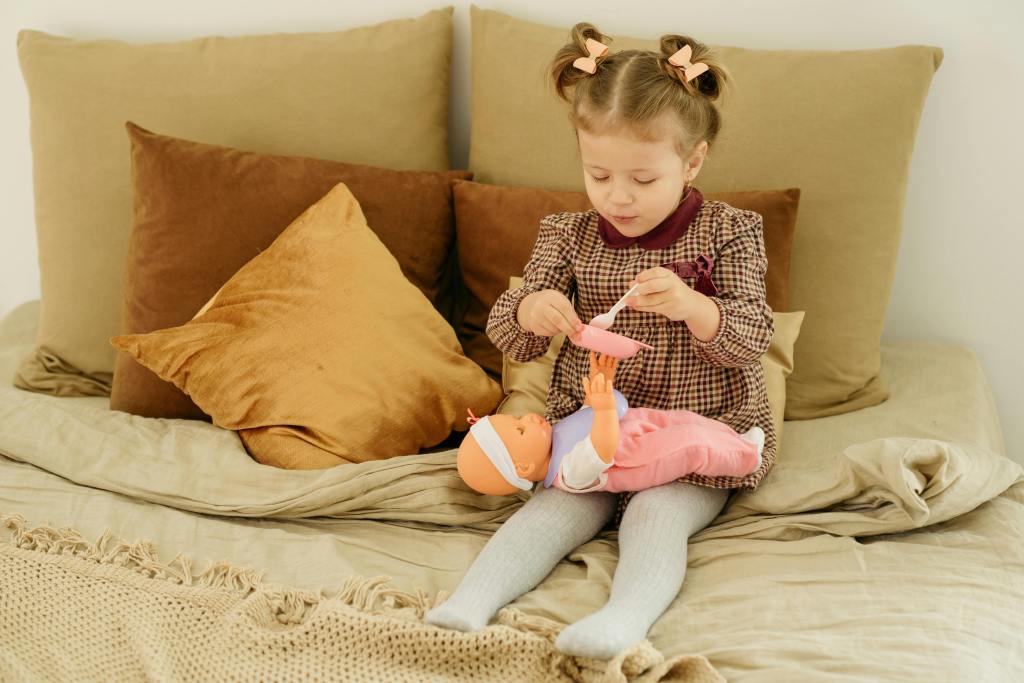
- Cuddle dolls that allow a child to mimic care-giving actions (feeding, dressing, bathing)
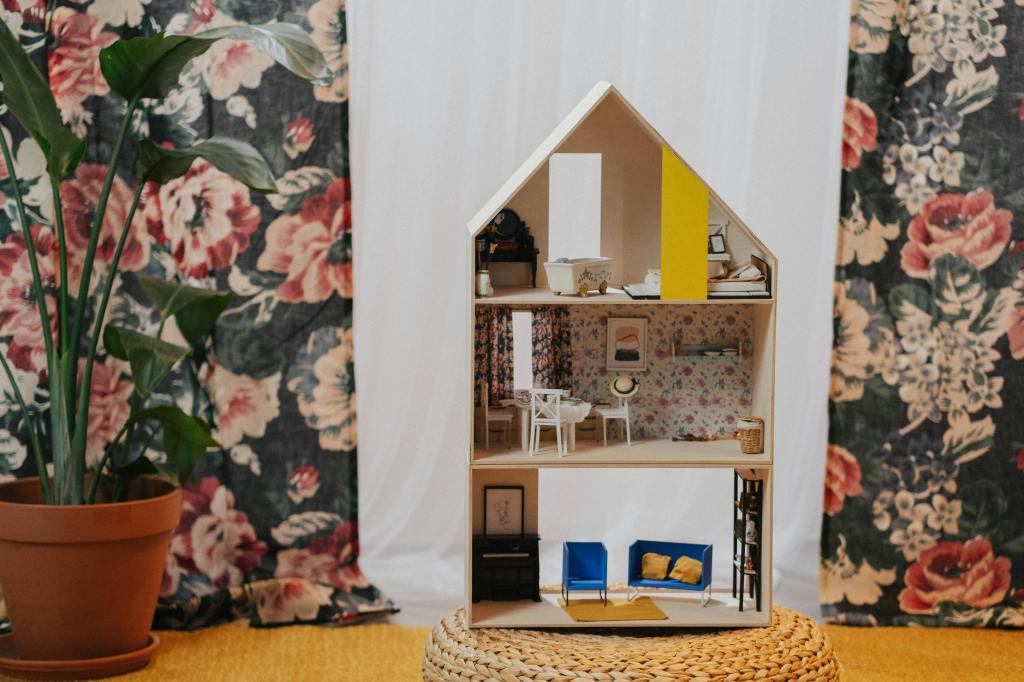
- Dollhouses with realistic furniture to sort by room
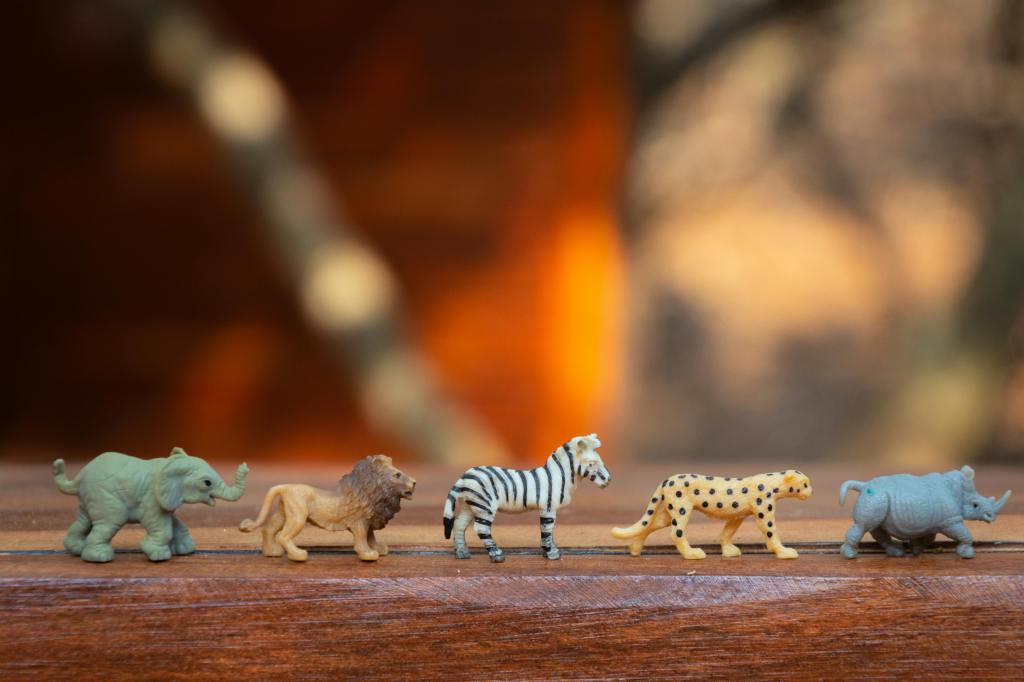
- Animal figurines grouped into categories (jungle, farm, arctic, desert)
- Vehicles arranged by type or color (e.g., red car, blue car, yellow car; or fire truck, dump truck, tow truck)
- Wooden blocks for open-ended construction
Each of these options supports symbolic play rooted in real-world logic, laying the groundwork for creative thinking, empathy, and eventually—imaginative storytelling.
Turning Everyday Objects into Language Lessons
You do not need a closet full of curated toys. What your child needs most is your presence, your words, and your joy.
Here are a few Montessori-style language games you can play with common toy categories:
🧺 Baskets of Learning
Organize small collections of related items to help your child categorize and name the world around them. Use this method with:
➤ Animals
- Group by habitat: jungle animals, farm animals, arctic animals
- Group by family: mother, father, baby of each species
- Group by geography: animals of Europe vs. animals of the desert
➤ Vehicles
- Sort by function: fire truck, dump truck, tow truck
- Sort by color: red car, blue car, yellow car
- Sort by category: land, sea, and air transportation
How to play: Line up the items on a rug or table and name them aloud. Later, play a gentle “Find the ___” game. Rotate baskets as your child’s interests evolve.
In each case, you can gently name each object, use repetition, and create games:
“Where is the fire truck?” or “Let’s line up all the jungle animals!”
Avoid testing your child with “What is this?” Instead, treat it as a joyful offering of knowledge: “This is a dump truck!” . Focus on sharing knowledge, not testing.
🧱 Free Play with Open-Ended Toys
Sometimes, play does not need structure — just freedom, presence, and the right materials.
➤ Wooden Blocks
Let your child build freely. You might offer a gentle suggestion like “Can I try something?” and stack two blocks in a new way. Then step away. Your child learns best through exploration, not instruction.
➤ Dollhouses and Dolls
Guide your child to sort furniture into the correct room, or show how to care for a doll by feeding, dressing, and bathing it.
➤ Loose Parts Play
Offer natural materials and household objects like boxes, pinecones, felt squares, rubber bands, cardboard tubes, as they are tools for imaginative storytelling.
➤ Practical Life Activities
Even cutting carrots or pouring water is a form of symbolic play. These tasks have a beginning, middle, and end — the same structure as a story plot.
Wooden vs. Plastic: What’s the Montessori Difference?
Montessori recommends using natural materials like wood whenever possible and for good reason.
Benefits of Wooden Toys:
- Unique textures, grains, and weights (e.g., oak vs. pine)
- Varied smells and sounds when tapped or struck
- Require gentle handling and care therefore helps teach the child to respect their belongings
- Help children connect with the natural world
Plastic toys, on the other hands, lack sensory variation. They are often louder, brighter, and harder to damage, but they do not require respect or offer deep sensory learning.
🌿 Montessori wisdom: choose fewer, higher-quality toys that invite care, wonder, and respect.

Creating Time and Space for Creative Play
It is usually overlooked that fact that many children today are over-scheduled, even with “good” activities. But children need time to process their experiences and to engage in unstructured, imaginative play.
Design a Play Space That Supports Creativity:
- Set up a quiet, inviting play area (in a bedroom, living room corner, or separate room)
- Avoid overwhelming the space with too many options
- Include open-ended materials: pillows, boxes, blankets, cardboard tubes, tape, string
- Schedule once or twice a week for other activities. Leave the rest for imaginative play.
Language as the Bridge to Everything
At the heart of Montessori’s message is this: Language is what connects us to our children, to the world, and to each other. It is through language that we share wonder, teach knowledge, express care, build intelligence, and inspire imagination.
Whether you’re naming a toy, describing an action, or reading a bedtime story, your words shape how your child sees themselves and the world.
💛 You are your child’s first and most important teacher. Through your voice, your choices, and your attention, you offer them the greatest gift: a love for learning, creativity, and life itself.
Play is not “just play.” It is the work of childhood — the foundation for language, problem-solving, emotional intelligence, and independence. The toys and activities we provide should reflect this depth and potential.
As this 4-part series on Montessori language and intelligence comes to a close, we hope you walk away feeling more confident, more intentional, and more inspired in how you engage with your child.
Start small. Choose fewer toys. Talk more. Observe creatively and gently. And always remember: it is your love, your language, and your respect that shape your child’s mind.




 TrieBios Baby & Mama
Leave a comment