
Have you ever wondered how your baby’s sounds and gestures shape their intelligence? The journey of language development starts much earlier than most people think — from day one!
In the 4-part series based on Chapter 8 of Montessori from the Start (P.P. Lillard & L.L.Jessen), we will explore how babies develop language and intelligence in the earliest years of life. This first post focuses on the foundation — how your baby’s brain is wired for language and learning from the very beginning.
Whether you are a new parent, a Montessori enthusiast, or just curious about child development, you will come away with a better understanding of what’s going on in your baby’s mind. You will also learn how you can support it with love, patience, and simple everyday interactions.

Language Is the Gateway to Intelligence
Montessori emphasizes many powerful ideas. One such idea is that the intelligence of children is closely tied to the quality of their language exposure. It also relates to the extent of their language exposure. In fact, the way a child uses and understands language deeply influences how they process ideas and affects how they make connections. This in turn helps them eventually form a sense of self.
Let’s break this down:
How Babies Develop Intelligence
In the book, Lillard and Jessen define intelligence with two interrelated abilities:
- The ability to create ideas and intentions, think about them, and organize them logically.
- The ability to apply these ideas to real life — to understand and transform the world.
It is not just about being “smart.” It’s about how children think, how they connect information, and how they begin to make sense of life itself.
And It All Starts with Communication
From the first days of life, babies start communicating with their caregivers. They do not use words yet. Instead, they communicate with eye contact, body movements, and sounds. This early back-and-forth is the foundation of all later learning. It’s in these moments that your child starts their journey to self-discovery: I am a separate entity. I can express something. I can affect someone else.

How Oral Language Develops in Babies
At Birth
- Babies are already familiar with the human voice, especially their mother’s. They have been hearing it, muffled, from inside the womb.
- Newborns can recognize human speech and show a clear preference for familiar voices.
- Even from day one, their brain is ready to absorb any language they are exposed to.
Around 2 Months
- By now, the motor nerves of the throat, tongue, and mouth are maturing. This allows babies to start babbling.
- The first sounds are usually simple vowels like “ooh” and “aah” — which are common across nearly all languages and easy to produce.
- Babies begin to “play” with these sounds, testing them out to see what happens. They’re practicing speech like a musician practices notes — it is joyful and meaningful.
By 6 Months
- The brain is becoming more specialized. Babies start focusing on the specific sounds of the language(s) spoken around them.
- The ability to hear and learn sounds from other languages starts to fade (a phenomenon called “perceptual narrowing”).
- This is a key window — the baby is starting to tune into the rhythm and sounds of your language.

Around 5 to 6 Months
- Babies begin to combine vowels with consonants — creating what is known as canonical babbling.
- Thanks to muscle development (often from sucking at the breast), babies can now form sounds like b, d, m, n, and sometimes j.
- They begin repeating sounds: ma-ma-ma, ba-ba-ba, da-da-da.
- And here’s the fascinating part — the more attention and engagement parents give during this stage, the more babies babble. Language thrives in loving interaction.
By 9 to 10 Months
- Babies begin to understand that sounds can have meaning.
- They may not say “real words” yet, but they grasp that when they make a certain sound, something happens — like you smiling or responding.
- This is the beginning of purposeful communication.
By 12 Months
- Many babies can say as many as 6 meaningful words.
- These are often nouns or familiar expressions.
- Vocabulary starts growing slowly — a few new words a month.

The Vocabulary Explosion (12–24 Months)
- Once your child reaches around 50 words, something magical happens: they start learning new words every day.
- This period is often called the vocabulary explosion, and it’s an exciting time for parents. Your toddler may surprise you with new words seemingly out of nowhere.
By Age 3
- A child’s unique approach to language is already well developed — and it is deeply connected to their overall development and identity.
- In the book, it notes that by age three, a child’s foundation for language (and many areas of intelligence) is largely set.
Between 2–6 Years
- Your child might learn a new word every two hours of their waking day. Seriously!
- Grammar begins to take shape quickly after this vocabulary boom. Your child starts stringing together more complex sentences.
- By age 4, most children have a good handle on basic syntax (the structure of sentences), even though they may still leave out small helper words like “to” or “the.”

Practical Tips to Support Your Baby’s Language Development
Genes do play a role — for example, reading ability is estimated to be about 50% inheritable, and spelling about 20%. But here’s the good news: that leaves a lot of room for environmental influence.
This means you, the parent, are a powerful part of your child’s language journey.
So what can you actually do, day-to-day, to help your baby develop strong language skills and build intelligence?
Here are some practical, Montessori-aligned ideas:
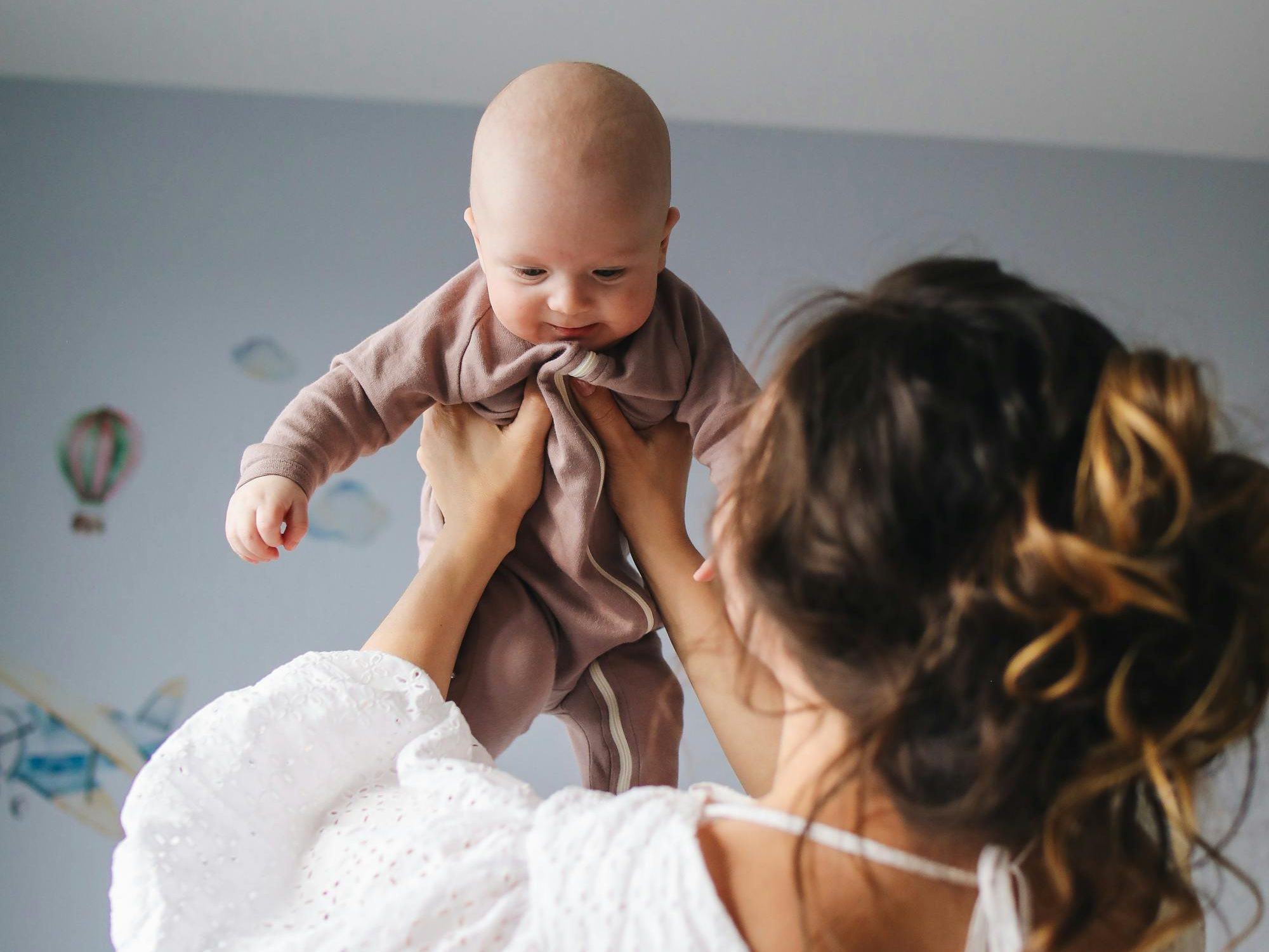
💬 1. Talk — and Wait
Speak to your baby throughout the day, whether you are nursing, changing, or walking together. Pause and give space for them to “answer” — even if it’s just a smile or coo.
🧸 2. Name Objects and Actions
Say what you are doing and name what your baby sees: “I’m picking up the spoon. Now I’m stirring.” Simple language, spoken with care, helps them connect words with the real world.
🐢 3. Speak Slowly
Remember — until 12 years old, your baby’s brain processes speech at half the speed of yours. Slow down so they can absorb each word.
🤔 4. Speak Respectfully
Talk to your child as if they can understand, even if they do not yet. It helps build their sense of importance and belonging in your shared world.
🎧 5. Limit Passive Language Exposure
Words from TV, YouTube, or overheard conversations do not help babies learn. They need language directed at them, with emotional connection.
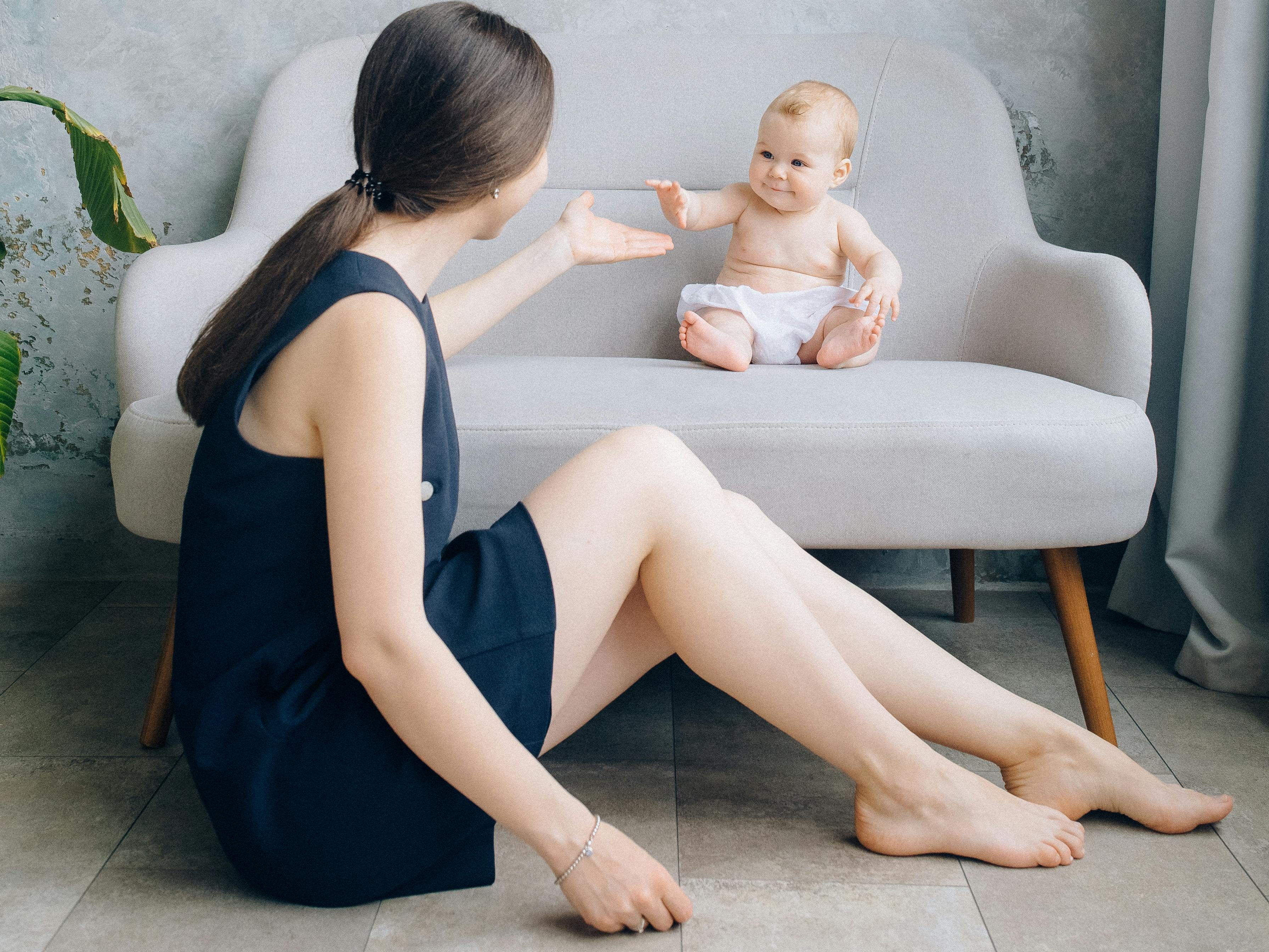
👋 6. Use Social Words
Teach everyday phrases like “hi,” “bye-bye,” and family names. These become meaningful tools your baby can use in real interactions.
👀 7. Pay Attention to Their Responses
When your baby tries to say something or uses a sound purposefully, respond. If their first attempts are ignored, they may hesitate to try again for a while.
❓ 8. Ask Questions and Repeat
Engage your toddler in short back-and-forths. Repeating and elaborating on their words helps expand vocabulary and confidence.
🗣️ 9. Imitate and Reflect
Repeat what your child says — even if it is imperfect — to show you’re listening and to model correct language gently. No need to concern about correction as children strive to copy the language they hear about them. Restating their phrases or re-pronouncing their words without addition comment is sufficient help for them.
🎲 10. Play Responsive Games
Simple games like peekaboo are not just fun — they build early communication and turn-taking skills.
🌱 Language is not just a skill — it’s the seed of intelligence, connection, and identity. And the way we nurture it in the early years can shape a child’s learning journey for life.
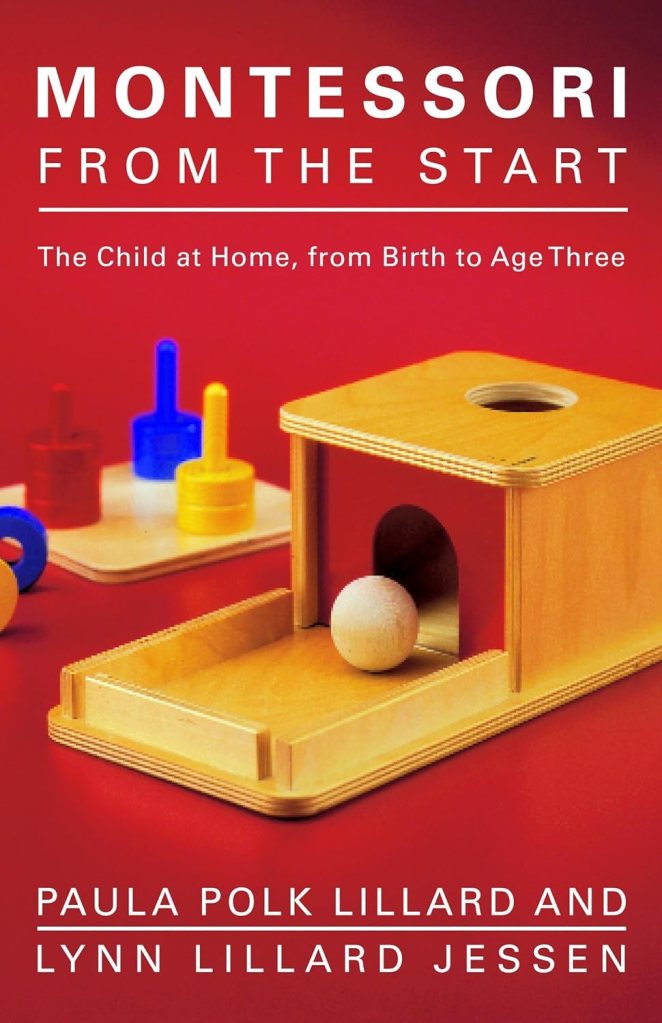
This post was inspired by Chapter 8 of Montessori from the Start. If you are enjoying these insights, you will love diving deeper into the book. It is full of practical guidance on how to support your child’s development with intention, respect, and love.
👉 Click to get Montessori from the Start and start your mindful parenting journey today.





 TrieBios Baby & Mama
Leave a reply to Caleb Cheruiyot Cancel reply